Curator
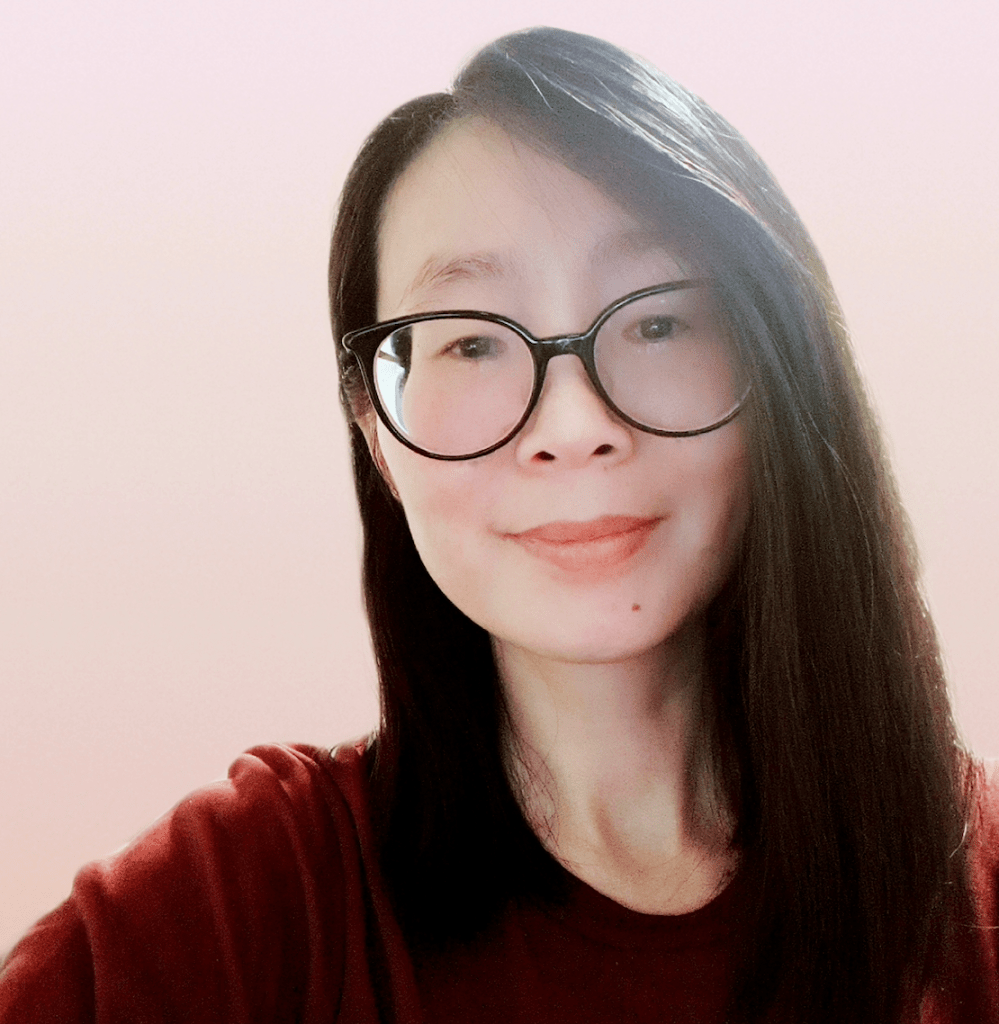
Dr. Yumin AO is the editor-in-chief of the Journal of Ying Ming Theater in Göttingen, Germany. In addition to her editorial responsibilities, she has organized public lectures on Asian theater, inviting scholars and artists from around the world. In 2022, Yumin Ao initiated the 1st International Symposium on Contemporary Asian Theater and the Forum of Young Asian Artists in Europe. She authored a monograph titled “Study on the Thematic, Narrative, and Musical Structure of Guan Hanqing’s Yuan Zaju Injustice to Dou’er” in 2015. Her directorial credits include theatrical productions such as Folding Cities (2023), Hello Strangers (2022), Plärren (2021), Love Letters (2021), The Last Laughs (2020), and Tough (2020). In 2020, she conceptualized and directed the project titled “The Sound Topography of Göttingen” as part of the 1st New York International Virtual Performance Festival, as well as a series of short plays called “Thunderstorm 2.0.” Currently affiliated with the University of Göttingen, Yumin Ao previously taught at Kennesaw State University and George Mason University in the USA.
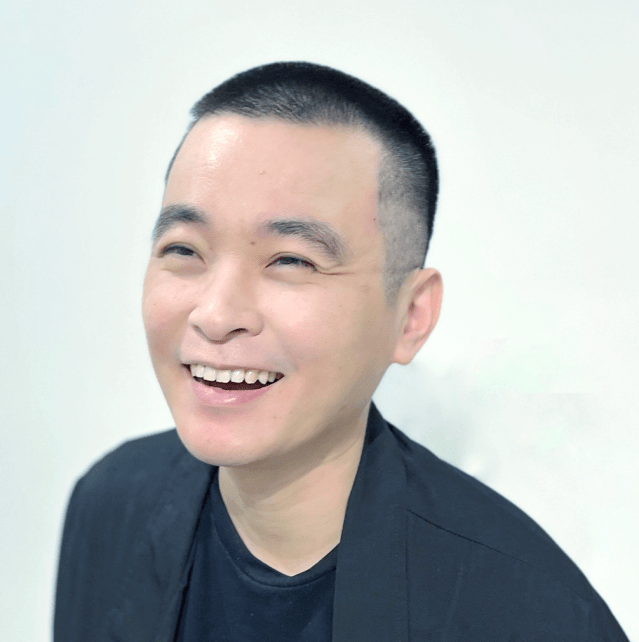
Xiaoyi LIU is considered one of the most promising figures at the forefront of the experimental theatre and cultural exchange network in Asia. He was the recipient of the Young Artist Award by the National Arts Council of Singapore in 2016. The artistic director of Emergency Stairs (Singapore) and the artist-in-residence at Zuni Icosahedron (Hong Kong), he has been involved in over 70 theatrical works in various capacities, such as curator, director, playwright, and actor over the past two decades. Since 2017, he has served as the artistic director of the cross-cultural arts festival Southernmost. Since 2018, he started to develop collaboration between digital technology and arts, including AI, AR, VR, and more. In 2020, he established the international cultural leadership development platform Emergency Academy.
Team Members
Haiqing ZHONG, a playwright of the National Theatre of China, Haiqing ZHONG graduated from the Shanghai Theatre Academy and the Central Academy of Drama with a Ph.D. in Fine Arts and is an active creator in the current stage art scene. His representative works include The Bells of Jingyang, The White-Skeleton Demon Subdues the Monkey King Three Times, Time of Sorrow, Dou Zhi Er, The White Snake, and Kill the Autumn Dream. He received the title of “Outstanding Aid-Tibet Cadre,” Second Prize in the “Tian Han Theoretical Award,” “Excellent Paper Award of Shanghai Graduate Student Academic Forum,” and the National Scholarship for Ph.D. Candidates. He is a member of the National Social Science Fund project “Research on the Construction of Guangxi Yueju Drama Performance Data Library” and a member of the Ministry of Education’s Humanities and Social Sciences Research Planning Project “Research on the Aesthetic Features of Programmatic Performance in Traditional Chinese Opera.” He has published over 30 professional papers in journals such as “Theatre Arts,” “Chinese Theatre,” “Playwright,” “New Script,” “Shanghai Theatre,” “Shanghai Art Review,” “Dialogue,” and “New Century Theatre.” He has participated in more than ten domestic and international academic conferences.
Eddie Hanchen FENG is an academic and award-winning playwright based in Beijing. He has been active in the theatre sphere for more than ten years and has worked as a writer, director, dramaturge, researcher, and translator. He holds a Ph.D. from the Central Academy of Drama, along with two professional fellowships at Martin E. Segal Theatre Center in New York City, and the Royal Central School of Speech & Drama in London. Applied himself to avant-garde theatre-making, Eddie has collaborated with renowned artists and has produced influential theatrical works to expand the definition of theatre through experimentations with its form, seeking to bridge the gap between theory and practice, academia, and professional theatre. During the Covid-19 pandemic, he co-created a series of livestream symposia that attracted over one million viewers. Since 2020, Feng serves as a lecturer at the Central Academy of Drama. In his research, he investigates and fosters the newly emerging dialogue in the 21st Century between China and the Western World.
Jiayi PAN graduated with a Bachelor’s degree in Drama Creation from the Drama Literature Department of the Central Academy of Drama. She is currently pursuing her Master’s degree in Drama Composition at the same institution. She serves as an intern journalist for the journal “Ying Ming Theater.” Her practical and research interests lie in the current status and development of applied theater in Asian countries and regions, as well as indigenous theater performances and theoretical systems based on decolonization.
Zijin CHEN received her undergraduate degree in European Studies from Hong Kong Baptist University. Currently, she is pursuing her interdisciplinary research track in Göttingen as part of the Erasmus Mundus Master’s in Euroculture Programme, with coursework completed in Sweden, Germany, and the Czech Republic. She is committed to becoming a human-centered fieldwork researcher, hoping to transcend the boundaries of traditional ethnographic writing by drawing on the practices of artists and constructing new narrative expressions, such as visual and multimedia representations of her research. She takes a firm stance on the side of egalitarianism amidst the many voices of ism, using semiotics and collective memory as her theoretical foundation to explore the role of gender gaze and identity in the narrative expression of literature and art in realizing the process of social convergence.
Haoqi LI, who received his undergraduate degree in Comparative Politics from George Washington University, is currently studying Erasmus Mundus Master’s in Euroculture in the Netherlands and Germany. He is actively involved in transnational collaborative projects dedicated to breaking down barriers between cultures and promoting inclusion and mutual respect in the global community by fostering dialog and understanding.
Yu SHAO, who received her Bachelor’s degree in Translation and Interpreting (E⇌C) at Beijing Foreign Studies University, is currently a master’s student of English Philology at the University of Goettingen. Despite a shift of academic focus, both disciplines satisfy her interests and constantly prompt new curiosity in the ever-changing contemplation of the “making of human beings”, a myth that is naturally sustained by intercultural environments and complicated regarding time and history. This becomes even more fascinating when technology enters the game. Humans are made, by what they made. Isn’t it thrilling that we live in an age when “I” does not necessarily refer to the I before and “R” does not necessarily mean the Reality as people used to know? Humans, willingly or unwillingly, have walked into a time of relentless relocation of a self and she’s ready to play her part.
Yaqi GUO received her bachelor’s degree from the Beijing Institute of Technology. Currently, she is pursuing a master’s degree in Economics at the University of Marburg, Germany. She had internships involving managing official accounts, product promotion design, as well as user feedback analysis at Bosch and Huawei. Growing up in a multi-ethnic environment, she is open-minded and enthusiastic about communication. In the CAPAS2024 project at Yingming Theater, she participates as an intern, mainly focusing on social media and website management.
Qian ZHANG, she works and lives in a historical religious organization in Marburg, Germany. She received her master’s degree in Economics from the University of Marburg with excellent grades and is currently writing her doctoral thesis on monetary policy at the University of Giessen, Germany. Intrigued by all aspects related to “money”, Qian Zhang seeks to deepen her understanding of how money operates beyond the academic realm. She is driven to uncover the intricacies of its functioning and explore how it should ideally work. Qian enthusiastically brings her expertise and passion into the funding preparation process of the project CAPAS 2024.

